Notting Hill: Portobello Road and the Coloured Houses
- Free cancellation up to 24 hours ahead
- Reserve now, pay later
One of the most photogenic neighbourhoods in London, and worth the trip out even beyond the market — but timing matters. Saturday brings the full Portobello Road antiques market and the crowds to match; a weekday visit trades the market stalls for a much quieter, more genuine look at the coloured streets.
Highlights
- Browse Portobello Road, one of London's oldest and most famous street markets
- Pose by the blue door made famous by the film Notting Hill
- Wander streets of pastel-painted terraces, among the most photographed in London
- See where some of Notting Hill's most famous residents live
Portobello Road Market
One of London's oldest and most famous street markets, running the length of Portobello Road. Saturday is the main trading day — antiques and collectibles at the south end near Notting Hill Gate, fruit and veg and household goods further along, vintage clothing and up-and-coming designers toward the north end near the Westway flyover. Friday runs a smaller version of the same market; Sunday, most stalls are closed.
The coloured houses
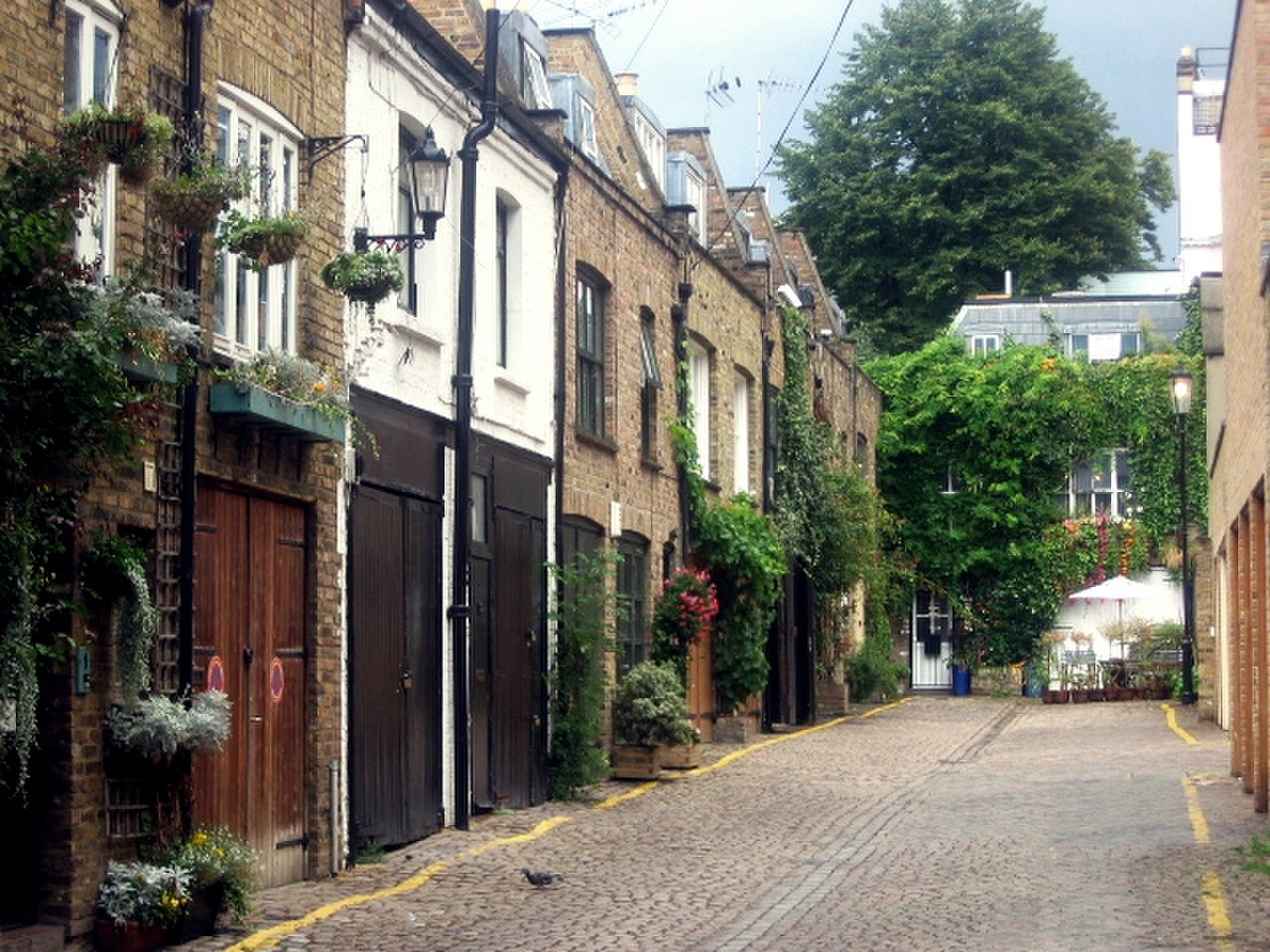
Notting Hill's pastel-painted terraces — on streets including Lancaster Road, Colville Terrace, Elgin Crescent, and St Luke's Mews — are the neighbourhood's signature look and among the most photographed residential streets in London. These are genuinely lived-in private homes, not a tourist attraction built for the purpose, so visiting with basic courtesy (no loitering directly outside doors, no loud group photo sessions) goes a long way.
A local guide knows exactly which streets have the best coloured houses and the real film locations — worth it if you don't want to wander in circles.
From £18Film locations
The 1999 film Notting Hill put the neighbourhood on the global map, and several locations are still identifiable — the travel bookshop that inspired the film's fictional shop (now a private residence), and a blue door on Westbourne Park Road widely (if not entirely accurately) associated with the film. The actual filming door has since been repainted by its owners to deter visitors; be mindful that these are real homes.
Best time to go
Saturday for the full market experience — busiest, but also the only day with the complete range of antiques stalls trading. Weekday mornings for a quieter, more residential feel — better for photographing the coloured houses without crowds, though fewer market stalls will be open.
Getting there
Notting Hill Gate station (Central, District and Circle lines) is the main access point, a short walk from the south end of Portobello Road. Ladbroke Grove station (Circle and Hammersmith & City lines) is closer to the market's northern, less touristy end.
Notting Hill: Frequently Asked Questions
Shops along Portobello Road are open most days, but the full market — including the antiques stalls — only trades in force on Saturdays. Friday has a smaller version of the same. Sunday is the quietest day, with most stalls closed. If antiques and the classic market atmosphere are the goal, Saturday is the only real option.
Yes and no — the original blue door used in filming (280 Westbourne Park Road) is a private residence, and the current owners repainted it a different colour years ago to discourage the crowds of visitors. A near-identical blue door nearby has become the unofficial substitute for photos. Either way, be respectful — these are people's actual homes.
The pastel-painted terraced houses along streets like Lancaster Road, Colville Terrace, and Elgin Crescent are Notting Hill's signature look — genuinely a residential neighbourhood, not a tourist installation, so visiting respectfully (no loitering directly outside private homes, no loud photography sessions) matters.
A focused visit — Portobello Road, a few of the coloured streets, a coffee stop — takes about 2 hours. If you're visiting on a Saturday for the full antiques market, allow 3–4 hours to browse properly.
It's one of London's wealthier residential areas, and prices at cafés and boutique shops reflect that. The market stalls themselves are more variable — genuine bargains exist alongside tourist-priced antiques, so it pays to compare a few stalls before buying.