Free Things To Do In London: 20 Genuinely Great Picks
London has a secret that many visitors only discover once they're here: it has more free world-class attractions than almost any other city on earth. The British Museum, Natural History Museum, National Gallery, Tate Modern — each one would headline the cultural offer of most European capitals. In London, they're all free, all the time. Add in the parks, the markets, the river walks, and the remarkable fact that wandering through neighbourhoods like Greenwich or Hampstead costs nothing, and you realise that London can be done brilliantly on almost no budget at all. Here are 20 picks that genuinely deserve your time.
The secret to doing London free: museums are open late on Fridays. The V&A stays open until 10pm, the National Portrait Gallery until 9pm. Friday evening at the V&A — quiet galleries, atmospheric lighting, no school groups — is one of the best free experiences in the city.
The 20 Best Free Things To Do In London
1. The British Museum
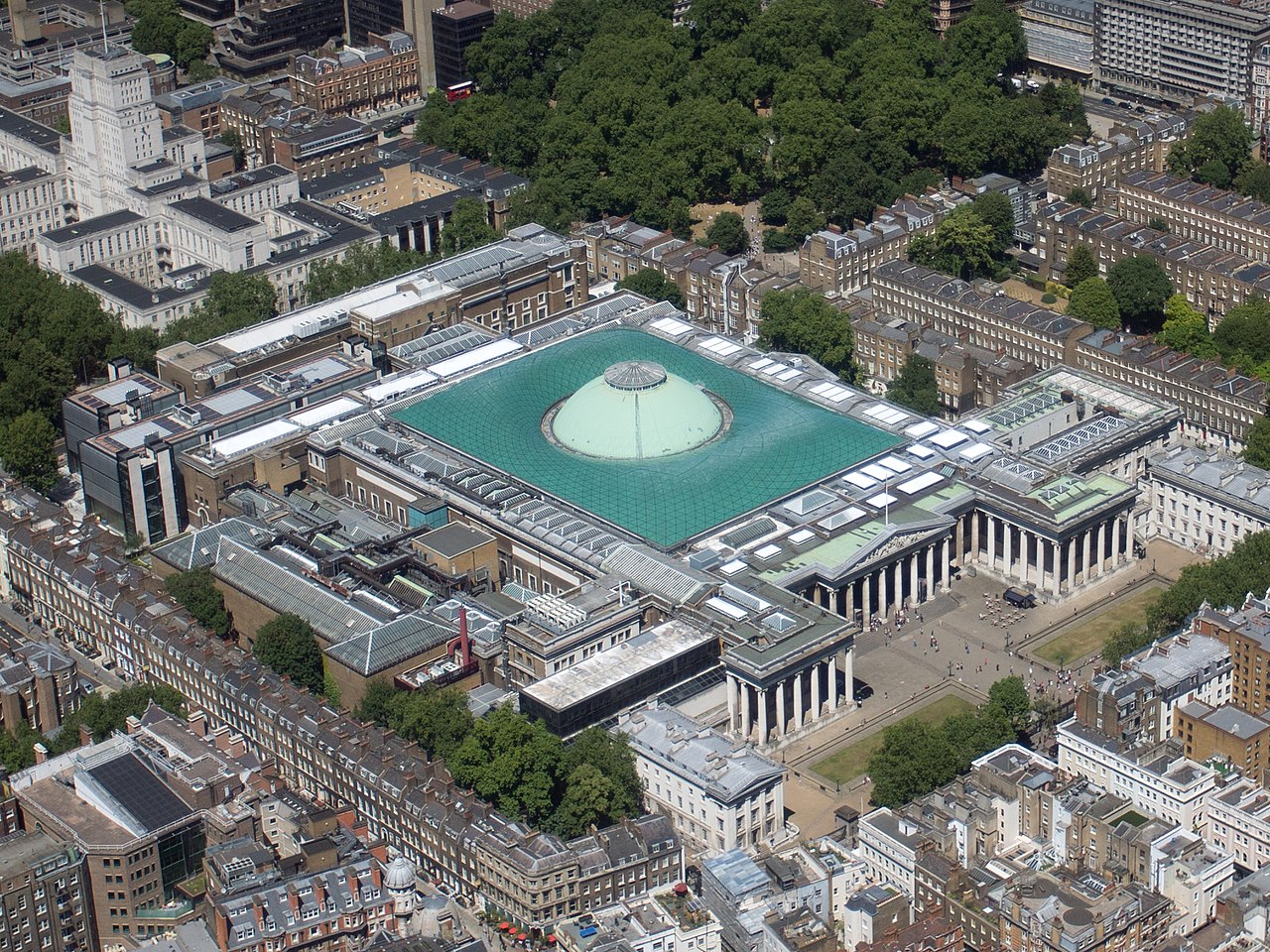
The British Museum is one of the greatest collections of human history on the planet, and it's free. That's still a remarkable sentence. Eight million objects spanning two million years of civilisation, housed in a stunning Bloomsbury building with a vast glass-roofed Great Court at its centre. You could visit every week for a year and not exhaust it.
The Rosetta Stone is smaller than you expect. The Elgin Marbles room is bigger. The Lewis Chessmen (Room 40) are the most charming things in the building. The Egyptian mummies in Rooms 62-63 will stop children — and most adults — cold. Don't try to see everything; pick three rooms and go deep.
Practical info: Great Russell Street, WC1B 3DG. Open daily 10am–5pm, Fridays until 8:30pm. Free. Book a timed entry slot online to guarantee entry, especially on weekends — it fills up.
2. Natural History Museum
The cathedral of natural history. The Hintze Hall alone — a vast Romanesque nave with a blue whale skeleton suspended from the ceiling — is worth the journey. The dinosaur galleries are genuinely spectacular, the Darwin Centre shows you behind the scenes of real scientific research, and the Vault has some of the most extraordinary gemstones and meteorites you'll ever see.
Come on a weekday morning to avoid the worst of the queues. The Wildlife Photographer of the Year exhibition (usually October to June) is one of London's great annual events — worth the small charge to see the full show, though the free highlights display in the hall gives you a taste.
Practical info: Cromwell Road, SW7 5BD. Open daily 10am–5:50pm. Free. The South Kensington museum quarter also contains the V&A and Science Museum within a three-minute walk — plan a full day.
3. Victoria and Albert Museum (V&A)
The world's greatest museum of art and design, and — this is important — the most beautiful museum building in London. The medieval and Renaissance galleries, the cast courts, the ironwork, the ceramics rooms: the V&A is a place where you keep turning a corner and saying "oh." The permanent collection is vast and permanently free.
Friday evenings are a particular joy. The museum stays open until 10pm, the cafes and bars are open, and there's often live music in the courtyard. It's one of the best free evenings in London, full stop. The café itself — in the original Victorian rooms — is worth a sit-down coffee even if you're not that hungry.
Practical info: Cromwell Road, SW7 2RL. Open daily 10am–5:45pm, Fridays until 10pm. Free. Temporary exhibitions charge separately.
4. Science Museum
Better than you remember from school trips. The Making the Modern World gallery has the actual Apollo 10 command module that orbited the moon, Stephenson's Rocket, and a bewildering array of objects that genuinely changed history. The space gallery, the computing history collection, and the recently renovated Energy Hall are all free.
The IMAX cinema and some special exhibitions charge, but the core museum is enormous and free. Good for all ages but particularly good for curious 8–14 year olds. Practical info: Exhibition Road, SW7 2DD. Open daily 10am–6pm. Free.
5. National Gallery
Trafalgar Square's anchor institution houses one of the finest collections of Western European painting in existence — van Eyck, Leonardo, Raphael, Caravaggio, Rembrandt, Vermeer, Turner, van Gogh, Seurat. All free, all the time. It's the kind of collection that most cities would build an entire tourist industry around.
Go straight to Room 34 for the Impressionists if that's your thing, or Room 9 for Holbein's Ambassadors (the skull in the foreground is a deliberate optical illusion — stand to the far right of the painting to see it snap into focus). The gallery is open late on Fridays until 9pm. Practical info: Trafalgar Square, WC2N 5DN. Open daily 10am–6pm, Fridays until 9pm. Free.
6. Tate Modern
The greatest modern art museum in the world, housed in a converted Bankside power station with a turbine hall the size of an aircraft hangar. The permanent collection covers everything from Picasso and Dalí to contemporary installation art, and it's all free. The Turbine Hall installations — a new commission each year — are among London's great cultural events.
Take the lift to the viewing gallery on Level 10 for one of the best free views of London: St Paul's Cathedral directly opposite across the Thames, the City skyline to the left, Tate Britain to the right. The café on Level 6 is reasonably priced and the views justify the coffee. Practical info: Bankside, SE1 9TG. Open Sun–Thu 10am–6pm, Fri–Sat until 10pm. Free.
7. Tate Britain
The older sibling on Millbank gets overshadowed by Tate Modern, which is a shame because its collection of British art from 1500 to the present is extraordinary. The Turner Prize is here. The JMW Turner collection — an entire suite of rooms dedicated to the greatest English painter — is staggering. The Pre-Raphaelites, Francis Bacon, David Hockney: this is the full sweep of British visual culture.
It's quieter than Tate Modern, which makes it a better place to actually look at art. The building itself, with its grand neoclassical facade, is beautiful. Practical info: Millbank, SW1P 4RG. Open daily 10am–6pm. Free.
8. National Portrait Gallery
Reopened in 2023 after a major renovation, and now better than ever. The collection tells British history through faces — monarchs, writers, scientists, revolutionaries. The Tudor galleries upstairs (including the most famous portraits of Henry VIII and Elizabeth I) are breathtaking. The contemporary portraits on the ground floor are surprising and often more interesting than you expect.
Late-night Fridays here are particularly atmospheric. The rooftop restaurant has views over Trafalgar Square that are genuinely spectacular. Practical info: St Martin's Place, WC2H 0HE. Open daily 10am–6pm, Thursdays and Fridays until 9pm. Free.
9. South Bank Walk
The riverside path from Lambeth Bridge to Tower Bridge — about five miles — is one of the great urban walks in Europe. Along the way: the Tate Modern, Shakespeare's Globe, the Golden Hinde, Borough Market, Southwark Cathedral, City Hall, the Shard, Tower Bridge. You pass booksellers under Waterloo Bridge, skateboarders at the South Bank Centre, and the best unobstructed views of St Paul's Cathedral from the Millennium Bridge.
Do it westward (Tower Bridge to Lambeth) on a clear evening with the light falling on the City skyline. The walk is flat, takes two to three hours at a gentle pace, and costs nothing. Practical info: Start at Tower Bridge or Lambeth Bridge. Accessible at all hours.
10. Changing of the Guard
More interesting than its reputation suggests, if you know what to look for. The ceremony happens at Buckingham Palace and runs about 45 minutes. The actual guard change involves elaborate ritual, military bands, and the whole theatre of British ceremonial life done with absolute seriousness. It's genuinely impressive.
Arrive early — the crowds build fast. A position at the front of the gates gives you the best view, but the side of the palace where the new guard approaches (from Wellington Barracks along Birdcage Walk) is worth knowing about. Check the schedule at householddivision.org.uk before going — it doesn't happen every day, especially in winter. Practical info: Buckingham Palace, SW1A 1AA. Free. Usually 11am when it happens.
11. Hyde Park
350 acres of royal parkland in the middle of the city, and free in every sense. The Serpentine lake has rowing boats for hire in summer (not free, but cheap). The Diana Memorial Fountain is a favourite with young children. The Serpentine Gallery has free contemporary art exhibitions. Speaker's Corner at the northeast corner on Sunday mornings — where anyone can stand up and say anything — is a genuine piece of living history.
In summer, the outdoor concerts and festivals in Hyde Park are one of London's great seasonal pleasures (most ticketed, but you can often hear from outside the perimeter for free). The park connects without a break to Kensington Gardens, adding another 265 acres. Practical info: Multiple entrances, W2 2UH. Open daily 5am–midnight. Free.
12. Hampstead Heath
The wild heart of north London. 790 acres of ancient woodland, meadows, and ponds that genuinely feel like countryside despite being four miles from the centre. The Parliament Hill viewpoint gives one of the best panoramic views of London's skyline — it's a picture-postcard view that most Londoners use as their phone wallpaper at some point.
The mixed bathing pond, the men's pond, and the ladies' pond are free outdoor swimming in natural ponds — a remarkable thing to exist in a major city. The ponds are open year-round, cold even in summer, and deeply beloved by a loyal community of regular swimmers. Kenwood House on the northern edge has a free art collection including a Rembrandt self-portrait. Practical info: Various entrances from Hampstead and Gospel Oak. Open all hours. Free.
13. Greenwich Park
Stand on the hill in Greenwich Park at the Prime Meridian — the line from which the world's time zones are measured — and you're at the literal zero point of global timekeeping. The Royal Observatory is up here (entry charge for the interior, but the view and the meridian line itself are free). Below the hill: the Cutty Sark, the National Maritime Museum, the painted Queen's House, and the Old Royal Naval College with its extraordinary Painted Hall.
The view from the hill across the Queen's House, the Thames, and the Canary Wharf skyline is one of London's defining panoramas. Greenwich itself is one of the most interesting villages in London — worth a full half-day. Get there by Thames Clipper from Embankment or Waterloo for maximum atmosphere. Practical info: Blackheath Gate, SE10. Open daily. Free.
14. Columbia Road Flower Market
Sunday mornings, 8am–3pm, in Bethnal Green. A single Victorian street lined entirely with flower sellers, the air thick with cut flowers, the vendors doing a kind of theatrical cockney patter that's part sales technique, part performance art. It's one of the most distinctive sensory experiences in London.
The surrounding streets are full of independent shops, cafes, and galleries that open for the market — this is proper east London, the version that hasn't yet been entirely colonised by brunch spots. Come early for the best flowers and a calmer atmosphere; come late (after noon) for the price-drop deals as sellers start clearing stock. Practical info: Columbia Road, E2 7RG. Sunday only, 8am–3pm. Free to browse.
15. Portobello Road Market (Saturday mornings)
One of the world's great antiques markets, at its best before 11am on Saturday when serious dealers are still set up and the crowds haven't yet turned the street into a shuffle. The antiques section at the Notting Hill end (north of the Westway) is dense with silverware, vintage clothing, art prints, maps, and extraordinary junk that occasionally turns out not to be junk at all.
South of the Westway the market shifts to food stalls and tourist tat — still worth a look but different in character. The surrounding streets of Notting Hill are some of the most beautiful in London: pastel-painted terraces, independent bookshops, excellent coffee. Free to browse; bring cash for anything you want to buy. Practical info: Portobello Road, W11. Saturday 9am–7pm for the full market.
16. Sky Garden (must book free tickets)
The glass dome at the top of the Walkie-Talkie building (20 Fenchurch Street) contains a free public garden with 360-degree views across London. It sounds like a marketing concept, but it's genuinely beautiful — tropical plants, a working garden, and views that on a clear day stretch to the North Downs.
The catch: free tickets must be booked in advance at skygarden.london and go within hours of release (usually three weeks ahead). Check back regularly; there are cancellations. Once you're in, drinks and food are available at normal London prices — the space itself is free. Practical info: 20 Fenchurch Street, EC3M 8AF. Open daily. Book free visits at skygarden.london.
17. Borough Market (browsing)
London's oldest and most celebrated food market has been here in some form since the 13th century, and the current covered market under London Bridge is one of the great food destinations in Europe. You don't have to spend anything to enjoy it — the smells, the produce, the spectacle of serious food being taken seriously by people who've dedicated their lives to it is worth the visit alone.
If you do want to spend: Monmouth Coffee has the best queue in London, Bread Ahead's doughnuts are the best in the city, and a wedge of Montgomery Cheddar from Neal's Yard Dairy eaten on the street is as good as lunch gets. Practical info: 8 Southwark Street, SE1 1TL. Monday–Saturday, with Thursday–Saturday being fullest. Free to enter and browse.
18. Barbican Centre Foyer
The Barbican is one of the most extraordinary pieces of architecture in Britain — a vast Brutalist residential and arts complex built in the 1960s and 70s that somehow got listed before anyone could knock it down. The arts centre at its heart has a foyer that runs free events on most evenings: jazz, classical music, spoken word, art installations, film screenings.
The free foyer programme alone justifies a visit, but the Barbican Lakeside terrace — with its lakes, walkways, and residential towers — is one of the most surreal and beautiful spaces in London. Get lost in it deliberately; the signage is famously confusing and getting slightly disorientated is part of the experience. Practical info: Silk Street, EC2Y 8DS. Open daily. Foyer events free; check barbican.org.uk for programme.
19. Southbank Centre
The complex of arts buildings between Waterloo Bridge and Hungerford Bridge — Royal Festival Hall, Queen Elizabeth Hall, Hayward Gallery — is one of Europe's great cultural campuses. The foyers are always open, always free, and often have something happening: music, installations, markets, readings.
The Riverside Terrace café has the best outdoor seating on the South Bank. The BFI Southbank (British Film Institute) next door has a free gallery and one of the best cinema archives in the world — the bar is excellent and open to non-film-ticket-holders. Practical info: Belvedere Road, SE1 8XX. Open daily. Foyer and terrace free.
20. The View From The Street — The Shard
The observation deck at The Shard costs £32 and up. The view of The Shard from street level — from Tooley Street, from London Bridge, from the South Bank — costs nothing and is, arguably, the better experience. The building is genuinely extraordinary from the outside: Renzo Piano's glass shard pushing out of the skyline at an angle that seems to change as you move around it.
The best free view in the neighbourhood is from Potters Fields Park, just east of Tower Bridge on the south side of the river — The Shard to your left, Tower Bridge to your right, the City skyline behind you. At dusk it's remarkable. No queue, no ticket, no charge.
If you're combining free days with ticketed attractions like the Tower of London, The Shard, or Westminster Abbey, a London Pass can cut the cost significantly. Check if it saves you money on your dates →
Found your free itinerary? Now find the right place to stay.
The area you base yourself in London makes a huge difference to how much you walk, how much you spend on Tube fares, and what neighbourhood life you get. Here's how to choose.
Free London: Common Questions
Yes — and this is one of the most remarkable things about the city. The British Museum, Natural History Museum, V&A, Science Museum, National Gallery, Tate Modern, Tate Britain, National Portrait Gallery, and many more are all permanently free. It's a matter of public policy and has been since 2001. Temporary exhibitions inside them often charge, but the permanent collections are yours without paying a penny.
Friday is the magic night. The V&A is open until 10pm on Fridays, the National Portrait Gallery until 9pm, and the Science Museum has occasional Lates events. The Tate Modern often runs Friday and Saturday evening events. Check each museum's website before you go — the Friday late openings are worth planning around.
Yes, but you must book in advance at skygarden.london. Free tickets are released weeks ahead and go fast. If you miss out, there are paid slots available, but the free option is absolutely real. Once you're up there, drinks and food are at normal London prices — the viewing itself costs nothing.
The Barbican Centre's free foyer events are genuinely underrated — jazz, classical, film screenings, art installations, all free, in one of the world's most extraordinary pieces of Brutalist architecture. Columbia Road Flower Market on a Sunday morning is another one: it's free to browse, the atmosphere is unlike anywhere else in London, and the traders' patter is part of the show.